Integrating Outlook and Google Calendars #
With working remotely, flexibility becomes a cornerstone of our professional lives.
Integration is not just a convenience—it’s an imperative.
Why not integrate your professional Outlook Calendar into personal Google Calendar?
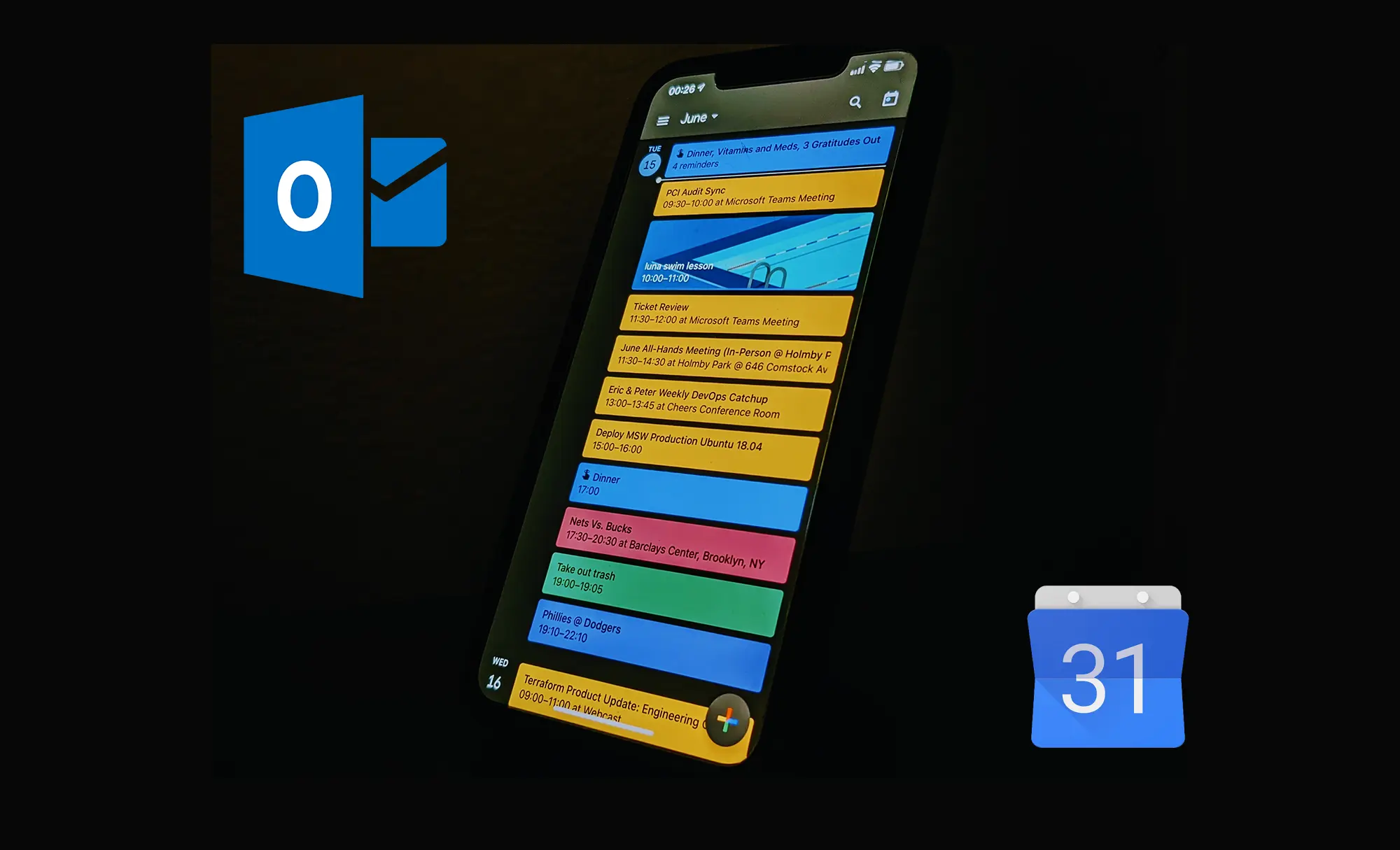
Work Meets Personal #
Imagine a scenario: You’re navigating Google Workspace for personal matters while your professional life revolves around Microsoft Office 365/Outlook. Ideally, wouldn’t you prefer a merged view of your work and personal events?
In my quest for integration, I initially experimented with sharing the Outlook Calendar via an ICS link.
A limitation surfaced. Google’s syncing mechanism operates in a 6 to 24-hour window, casting shadows of doubt over the real-time authenticity of the events. Consequently, I often found myself reverting to the dual-calendar check, defeating the very objective.
Discovering the Perfect Sync Tool #
Fortune favors the persistent. I happened upon a promising script. This code reminded me of a synchronization script from my Atlas Digital days, which aligned Sage Time and Attendance events with Google Calendar.
Initial skepticism about this script arose from a 2019 Stack Exchange commentary which highlighted the Google Apps Script as incomplete. Yet, delving deeper, I discovered its evolution into a feature-loaded tool. While I toyed with the idea of adapting this into a Kubernetes function, akin to my Craigslist renew routine, the current Google Apps Script stood robust.
Successful Integration #
The outcome? Absolute synchronization delight! With updates every 15 minutes and an auto-clear function for past work events, my personal calendar now exclusively displays future work-related tasks, streamlining my planning process.
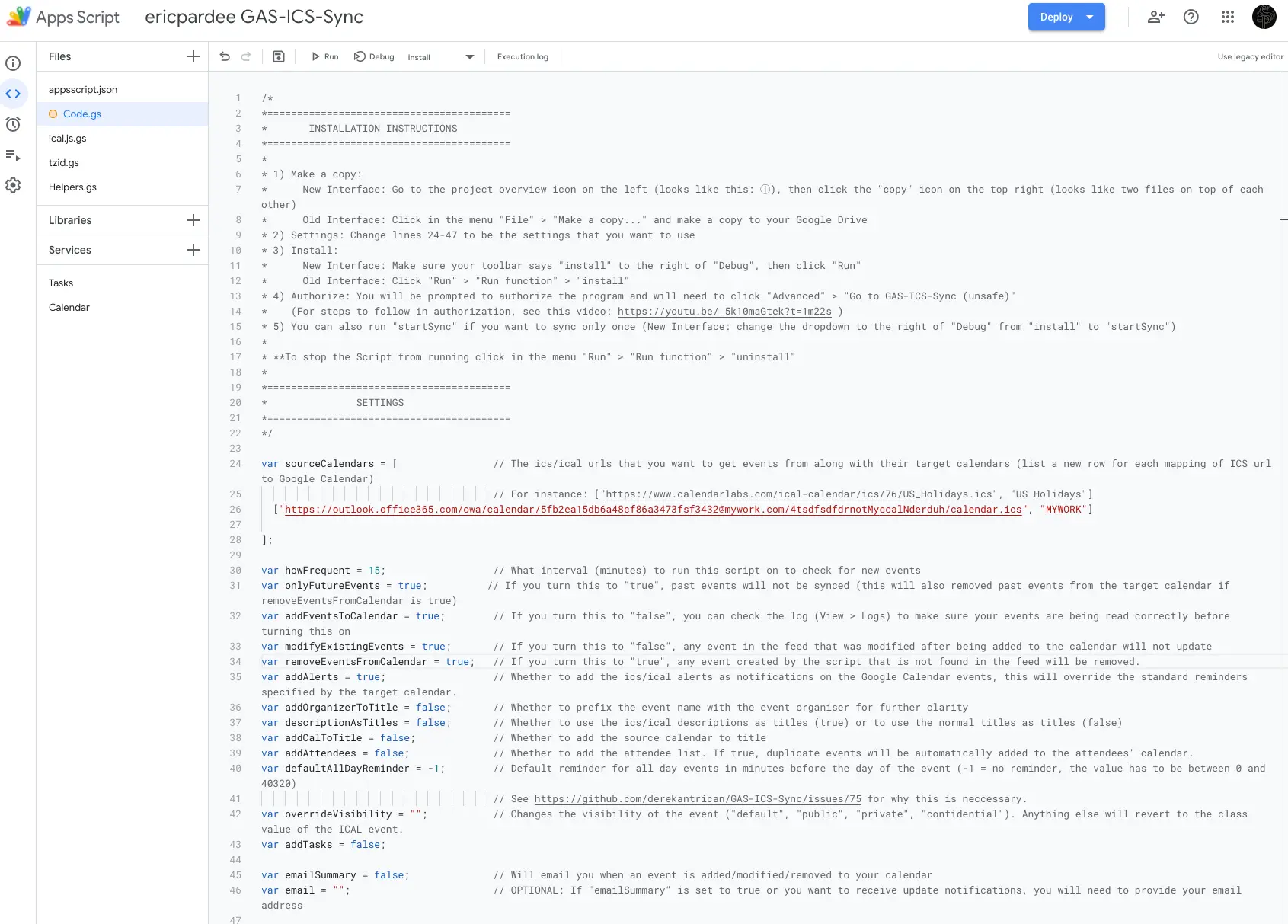
Confronted with similar scheduling challenges?
Embark on this integration journey:
Google Apps Script Integration Guide
(Begin the setup using the clear instructions provided at the start of the script.)